

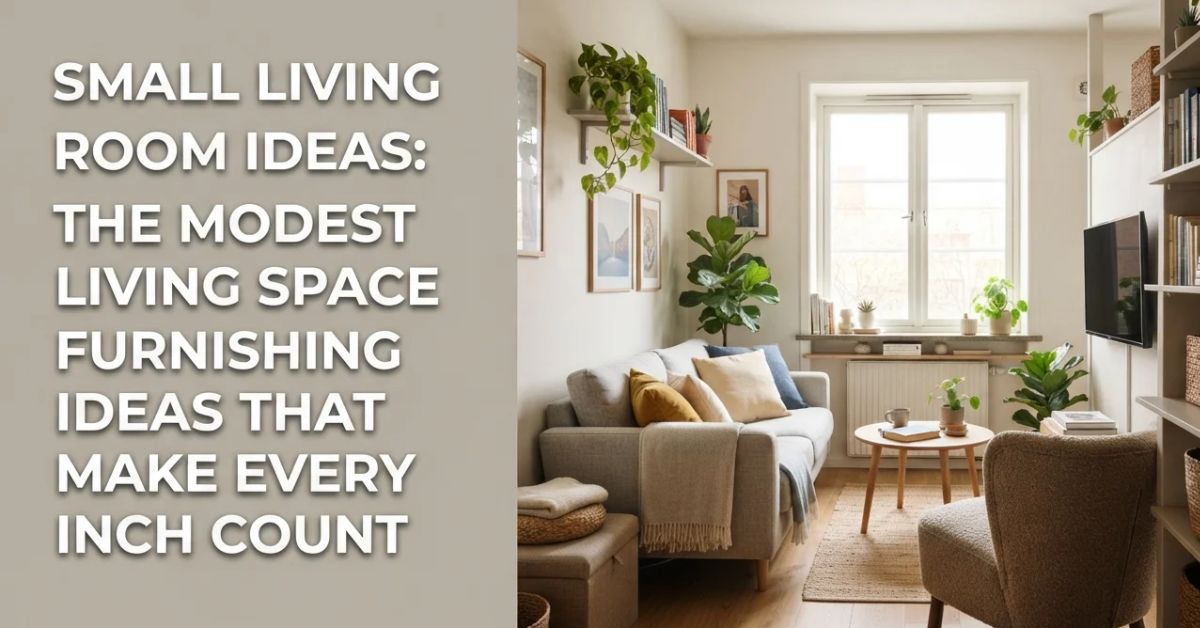
A 12-by-14-foot living room has 168 square feet. Most of that space isn’t lost to too much furniture. It’s lost to the wrong furniture: the bulky sectional bought for a bigger house, the coffee table nobody can walk around, the side table that exists only to hold a lamp.
We build furniture for a living, and the best small living room ideas we’ve seen all start the same way: fewer pieces, chosen with more care. Here’s how to furnish a modest living space so it feels open, warm and completely yours.
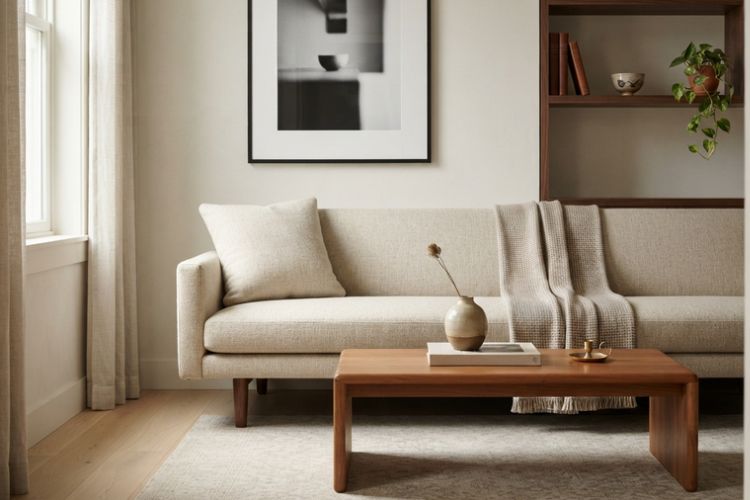
In a large room, a mediocre piece of furniture fades into the background. In a small room, every piece is on display. That’s the good news. A modest living space is the perfect place for one or two pieces with real character, because nothing competes with them.
Instead of filling the room, aim to furnish it with:
Before buying anything, sketch your small living room layout on paper. Mark doors, windows, vents and outlets. Then plan the furniture around how people actually move through the room.
Main walkways need roughly 30 to 36 inches of clear space. Leave about 14 to 18 inches between the sofa and the coffee table, so knees and drinks both have room. If a layout breaks these numbers, a piece is too big.
It sounds backwards, but pulling the sofa a few inches off the wall creates shadow and depth. The room reads as layered rather than lined up against its edges.
A window, a fireplace or a statement table. Choose one and arrange the seating to face it. Two focal points in a small room feel like an argument.
Good furniture for small spaces isn’t just smaller. It’s lighter to the eye, works harder, and fits the room’s proportions.
Pieces raised on legs or open steel bases let you see the floor underneath. More visible floor means the room feels larger. A slim metal base under a wooden top is one of the easiest ways to get this effect.
A bench can be seating and a coffee table. A nesting side table tucks away when guests leave. A console behind the sofa doubles as a desk. Every piece should earn its spot.
A small room can hold a substantial piece if its proportions are right. One solid, well-made table often looks better than three flimsy ones scattered around.
The coffee table is usually the piece that makes or breaks a modest living space. It sits in the middle of the room, it’s touched every day, and it sets the tone for everything around it.
A good rule: the table should be about two-thirds the length of your sofa, and the same height as the seat or an inch or two lower. In tight rooms, round or oval tables are easier to walk around than rectangles with sharp corners.
When a coffee table for a small living room carries real character, the rest of the room can stay simple. A live edge coffee table does this naturally: the slab’s organic outline and grain become the decor, so you don’t need a pile of accessories on top.
Small rooms can easily feel cold when everything is white, gray and flat-packed. Natural wood fixes that without taking up extra space.
If you’re deciding between species, our guide to choosing the best wood for a dining table covers how each one looks and wears. And because custom wood furniture is built to your measurements, you never have to settle for a standard size that’s six inches too long for your wall.
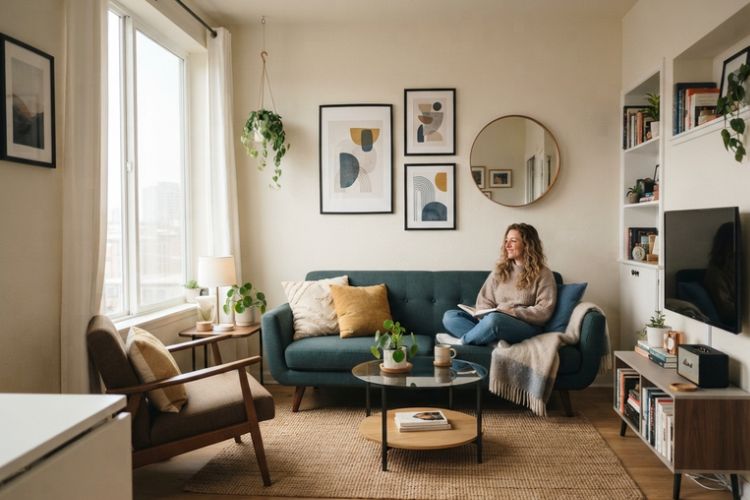
Before you buy anything else, run through this list:
How do I make a small living room look bigger?
Use furniture on legs, keep walkways clear, choose one focal point and repeat a small palette of colors and wood tones. Mirrors opposite windows also help spread natural light.
What size coffee table is best for a small living room?
Aim for about two-thirds of the sofa’s length, with 14 to 18 inches of space between the sofa and the table. Round or oval shapes are easiest to move around.
Is it better to have fewer, larger pieces in a small room?
Usually, yes. A few well-proportioned pieces look calmer than many small ones. The key is matching the scale to the room, not just picking the smallest option.
Can a live edge table work in a small living room?
Yes. Because its natural edge softens the shape, a live edge table often feels less bulky than a hard-edged rectangle of the same size. Choose a slab sized to your layout.
The best furniture for a small living room is the piece that fits your space, your routine and your taste exactly. At Crooked Tree Woodworks, every table is handmade in Salt Lake City to the dimensions you need, in the wood you choose.
Commission a custom piece or request a free quote and we’ll help you find the right slab for your room.