

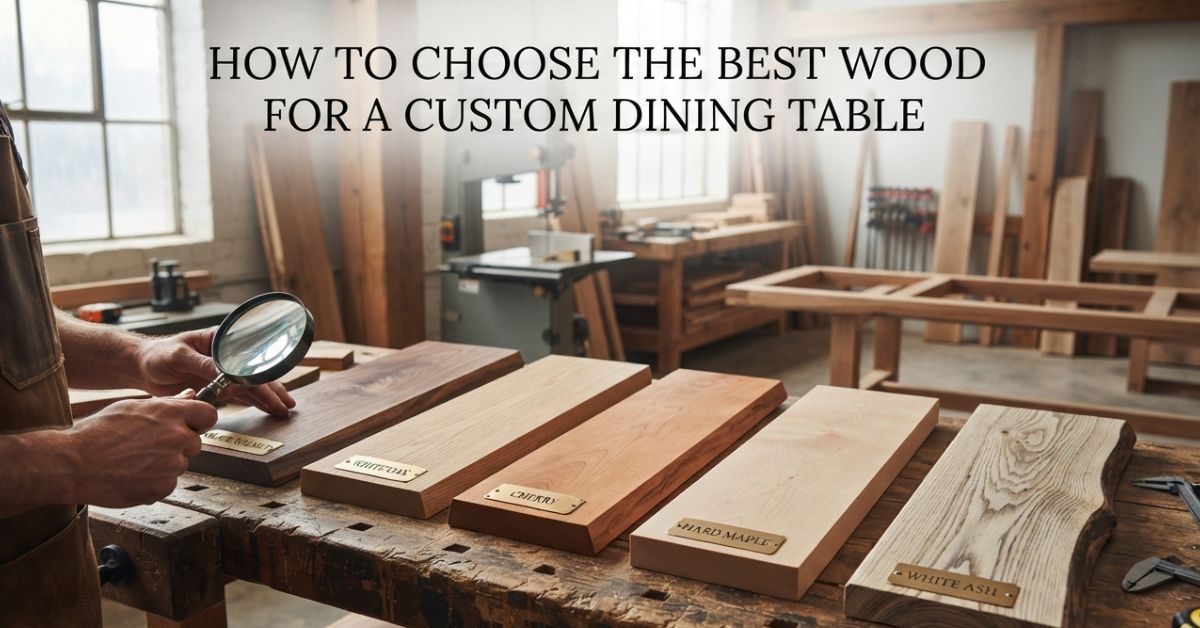
Some dining tables look better as they get older. The wood picks up small marks from everyday meals, its color slowly changes, and over the years it starts to feel like it belongs in the room. A lot of that comes down to the wood chosen in the beginning.
There are plenty of options, but the best wood for dining table use depends on what you expect from it. Walnut has a deep, warm look, white oak is known for its strength and grain, while maple, cherry, and exotic woods each bring something different. Knowing how these woods look, wear, and age will help you choose one you will be comfortable living with for years.
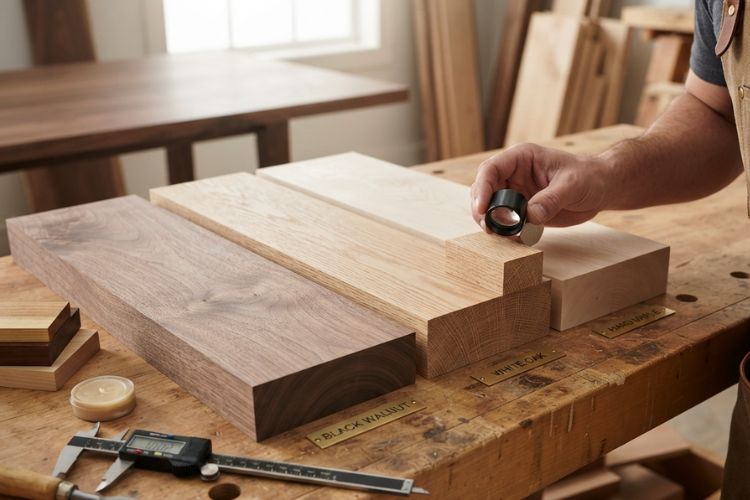
A good dining table wood should be strong enough for everyday meals, spills, scratches, and regular use. Hardwoods are often chosen because they hold up well over time and can usually be refinished when the surface begins to show wear.
A hardwood dining table should also be made from properly dried wood, as real wood naturally reacts to changes in humidity. Beyond strength, look at the grain, color, and natural markings. The best wood for dining tables is one that works for daily use while giving you the look you want in your space.
Several species work well for dining furniture, but they create very different results.
Walnut is known for its deep brown tones and expressive grain. Its natural color can range from medium brown to darker chocolate shades, giving the tabletop noticeable depth.
A walnut dining table can become a strong visual feature without requiring an elaborate design. It works comfortably in contemporary, traditional, and transitional interiors.
For someone looking for the best wood for dining table designs with rich color and natural variation, walnut is worth considering.
White oak combines strength with a distinctive grain pattern. Its lighter natural color also gives furniture a very different presence from walnut.
An oak dining table can work in both traditional and modern spaces depending on the finish, base, and overall shape. Its durability makes it particularly useful in homes where the table sees regular activity. For a frequently used hardwood dining table, white oak offers an appealing combination of strength and natural character.
Exotic species can offer unusual grain patterns, colors, and slab characteristics. They are often chosen when the wood itself is meant to become a major part of the design.
Availability and pricing can vary, particularly when a large slab is required. This applies across custom pieces, from dining tables to an exotic wood desk for sale. For a distinctive custom wood table, it can be useful to see the actual slab before construction because natural variation may be considerable.
Maple is dense, durable, and generally lighter in appearance. Its grain tends to look more restrained than the dramatic patterns found in some other species.
That cleaner appearance works particularly well with contemporary or minimalist furniture. Maple is a practical candidate when comparing the best wood for dining tables for a busy household that also wants a lighter wood tone.
Cherry has a smooth grain and naturally warm appearance. One characteristic that sets it apart is the way its color develops with age and exposure to light.
Rather than remaining exactly as it looked when new, cherry gradually becomes deeper and richer. Homeowners considering this wood should be comfortable with that natural change.
How often you use the table should influence the wood you choose. A busy family dining area needs a surface that can cope with regular meals, spills, and occasional scratches. In that setting, a durable hardwood dining table can be a sensible option.
Different woods also show everyday wear differently. A walnut dining table has a darker, warmer surface, while an oak dining table has a more pronounced grain that can make minor signs of use less noticeable. Think about how you want the table to look after years of regular use, not only when it is new.
The wood you choose should feel comfortable with the rest of the room. Darker woods can add warmth, while lighter tones can keep the dining area feeling more open. Grain also changes the look, from smooth and subtle patterns to bold lines, knots, and natural markings.
If space is limited, modest living space furnishings ideas can help you think about how the table’s wood tone, size, and surrounding furniture work together without making the room feel crowded.
The price of wood can change depending on the species, size, availability, and quality of the piece. Wide slabs, unusual grain patterns, and harder-to-source woods generally come at a higher price. Exotic species may also cost more because of their limited availability and sourcing.
Price alone, however, does not determine the best wood for dining table projects. A more readily available wood may give you the durability, color, and grain you want without paying extra for a rare species that does not add much to your particular design.
Start with practical use, then narrow your options by durability, color, grain, table style, and budget. Whenever possible, view actual wood samples or slabs instead of relying entirely on photographs.
A custom table gives you the opportunity to consider the wood alongside its dimensions, edge style, base, and finish. The best wood for dining table construction is the one that brings those details together without compromising how the table needs to function.
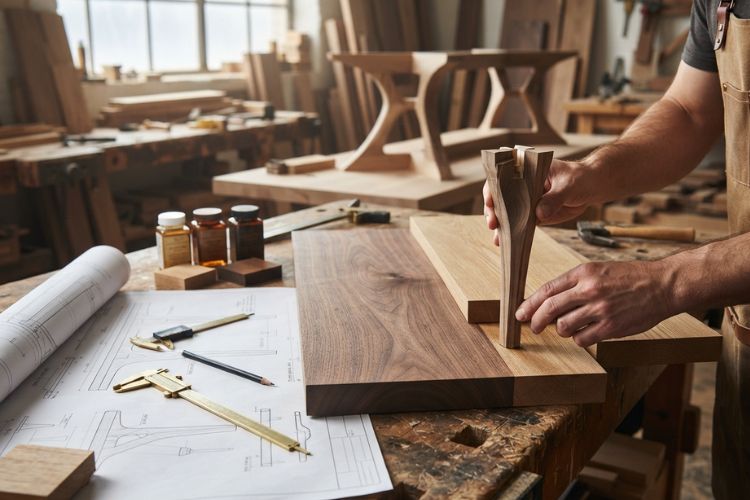
The table design can help narrow the wood choices. Live edge tables often benefit from slabs with distinctive grain and natural outlines, while straight-edge designs can create a more controlled appearance.
Dimensions are important too. A large custom wood table may require a particular slab size or construction approach, and not every species is equally available in the dimensions required.
The base, tabletop thickness, edge treatment, and finish should all be considered together. Working with specialists in handmade wood furniture USA gives homeowners the opportunity to make these decisions around one complete design rather than choosing a table from predetermined options.
The wood you choose becomes a big part of how the dining table looks, feels, and changes with use. Grain, color, hardness, and natural variation all deserve attention, especially for a table that may stay in the home for many years. Taking the time to compare different species can help you find one that suits both the room and your everyday routine.
For those exploring custom options, Crooked Tree Woodworks works with a range of woods to create dining tables and other handcrafted pieces. The natural grain and individual characteristics of each wood are considered as part of the finished design.
Which wood is most durable for a dining table?
White oak and maple are both known for good hardness, although construction, finish, and care also affect durability.
Is walnut or oak better for a dining table?
Walnut provides darker tones and rich grain, while white oak offers a lighter appearance and strong everyday durability. The choice depends on the desired look and use.
Which wood is best for a live edge dining table?
Walnut and many exotic species work well because their grain and natural slab characteristics can become part of the design.
Does dining table wood need to be hardwood?
No, but hardwoods are commonly preferred because many species provide the strength and durability needed for frequent dining use.
Is an exotic wood dining table worth considering?
Yes, if you want distinctive grain and color. Just consider the cost and availability, as some exotic woods can be harder to source.