

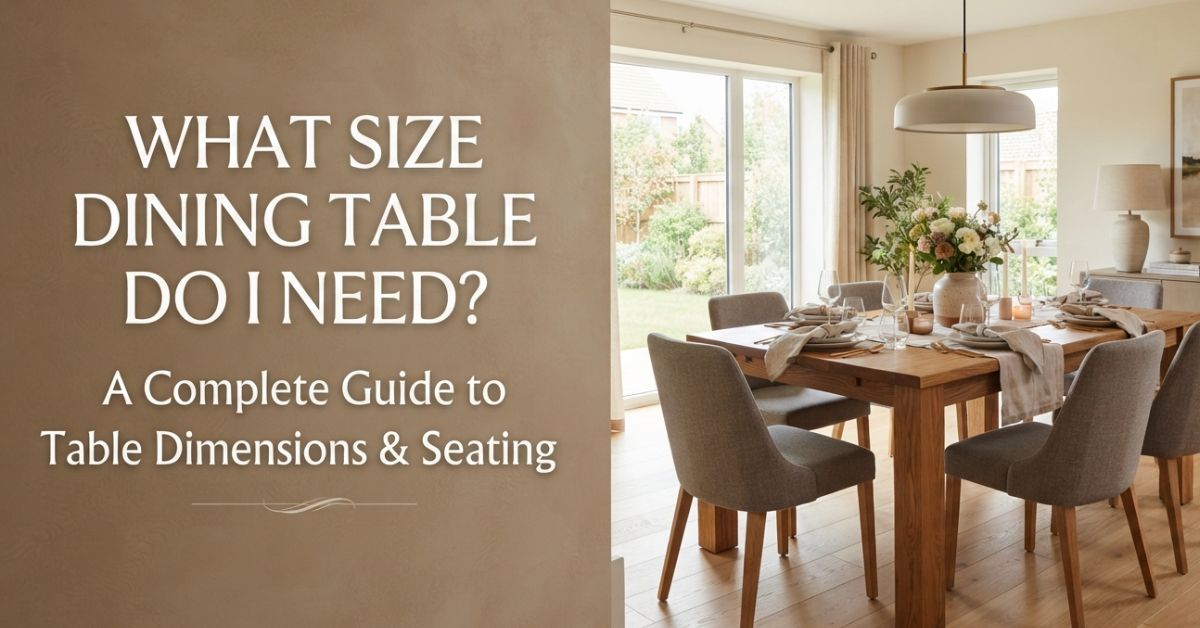
A dining table may look like the right size when the room is empty. Add six chairs, pull a few of them out, and suddenly the same space can feel much tighter. That is why choosing a table based only on its length rarely works.
If you are asking what size dining table you need, start with the room and the people who will use it. Available floor space, chair width, walking paths, and the table base all matter. This Dining Table Size Guide will help you work through those details before deciding on the final size.
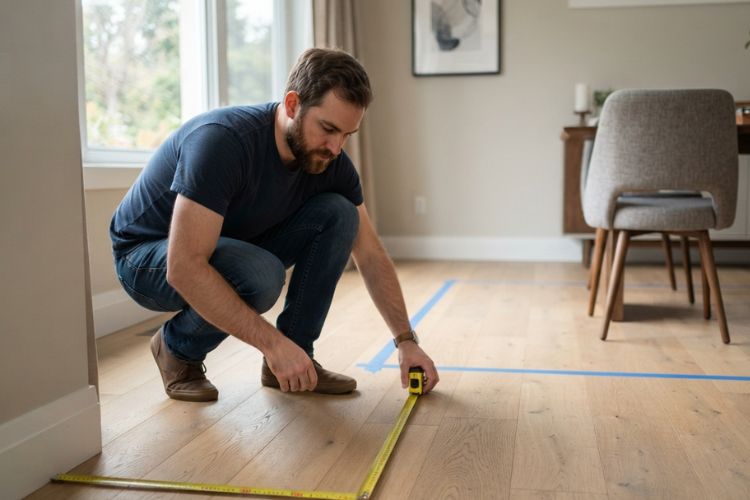
Start by measuring the length and width of your dining area. Then look at what already takes up space around it. A sideboard, kitchen island, cabinet, fireplace, or door can reduce the usable area even when the room itself is fairly large.
As a starting point, aim for around 36 inches between the table and a wall or nearby furniture. Where people regularly walk behind occupied chairs, more room may feel better.
A simple calculation can give you an approximate maximum table size:
Treat these numbers as a starting point. Your final dining table measurements may need to change depending on doors, furniture, and busy walking routes.
A table does not use the room by itself. Once people sit down, chairs extend beyond its edges and need additional room when someone gets up.
Picture a normal dinner. One person may be walking to the kitchen while another pushes a chair back. Someone else may need to reach a cabinet behind the table. If there is barely enough room when every chair is tucked in, the setup will probably feel cramped once people are seated. This is why a Dining Table Size Guide should account for the occupied dining area rather than only the tabletop.
Around 24 inches of table edge per person is a useful starting point for many dining setups. It leaves space for a place setting and gives diners some elbow room.
Chair design can change that figure. Wide upholstered chairs or chairs with arms naturally use more space than narrow wooden side chairs.
Your dining table seating capacity therefore depends on more than length. Before assuming eight chairs will fit, look at the actual width of the chairs you plan to use and where the table supports are positioned.
The following ranges can help with early planning. They are not strict rules because chair widths, table bases, and preferred spacing differ from one home to another.
A rectangular table around 48 inches long is a practical starting point for four people. Round and square designs can also suit this group well, particularly in smaller dining rooms.
Avoid choosing the smallest possible tabletop just because four chairs technically fit. A little extra surface space can make everyday meals more comfortable.
A common dining table size for 6 is around 60 to 72 inches long. A 60-inch table can work when space is limited, while moving closer to 72 inches gives diners more breathing room.
When comparing standard dining table dimensions, also check where the legs or base sit. A support that blocks a chair position can make a table feel smaller than its measurements suggest.
A practical dining table size for 8 is often around 84 to 96 inches long. One arrangement may have three people along each side with one person at each end. Another may place four chairs along either side.
Neither arrangement works equally well with every base. Chair width also becomes more noticeable as more people are seated together, so check the complete setup rather than relying on the stated capacity.
A dining table size for 10 may fall around 96 to 120 inches long. The longer end of that range gives you more flexibility if your chairs are wide or you prefer more personal space between guests.
Large tables also need enough width for plates and serving dishes. At this point, the surrounding room matters just as much as the tabletop. A ten-person table that leaves little room for chairs to move will not be comfortable in regular use.
Tables for 12 need considerably more planning. A longer top has to fit the room while leaving enough space at the sides and ends for chairs and movement.
Base support becomes important too. Rather than selecting a table by length alone, look at the complete seating arrangement and how the structure underneath affects each position.
Length usually gets the most attention because it affects how many chairs fit along the sides. Width has a different job. It determines how much room remains between place settings on opposite sides.
Many rectangular tables are around 36 to 44 inches wide. A narrower table can be useful in a tighter room, while additional width gives you more space for platters, serving bowls, and centerpieces.
Very wide tables are not automatically more comfortable. Food becomes harder to pass, and conversation across the table may feel less natural. Look at width and length together when comparing dining table dimensions.
Not every table uses its dimensions in the same way. A rectangular table makes efficient use of its length and is often practical for larger groups. Round tables work differently because seating is arranged around the diameter rather than along straight sides.
Square tables can be comfortable for smaller groups but take up more room in both directions as they grow. Oval tables provide useful length while their curved ends slightly change the available seating area.
Keep these differences in mind when using a Dining Table Size Guide. Two tabletops with similar overall measurements may not offer the same number of comfortable seats.
Measure your dining chairs at their widest point before finalizing the table. This is especially important if they have arms, thick upholstery, or unusually wide frames.
If you already own the chairs, line them up to see how much space they actually take. Check whether they can slide underneath the tabletop as well. Chairs that tuck in neatly can leave noticeably more walking room when nobody is seated. These details can change the dining table seating capacity even when the tabletop itself stays exactly the same size.
The base is easy to forget because most sizing decisions begin with the tabletop. In everyday use, however, the structure underneath determines where knees, feet, and chairs can go.
Four-leg designs may limit seating close to the corners. Pedestal bases often leave more of the table edge open, while trestle and steel bases need to be positioned carefully so they do not interfere with end chairs.
If the room requires dimensions that are difficult to find in stores, Custom Dining Tables can be planned around the seating arrangement as well as the available floor space. The base and top can then be designed together rather than treated as separate decisions.
Think about Tuesday dinner before Thanksgiving dinner. If four or six people use the table throughout the year, buying a huge table for one annual gathering may leave the room unnecessarily crowded every other day.
Consider how often friends visit, whether large family meals are common, and whether the table is also used for homework, work, crafts, or games.
If you occasionally need extra seats, an extension design may make more sense than keeping an oversized tabletop in the room permanently.
Painter’s tape gives you a simple way to see how your proposed dining table measurements will work in the actual room. Mark the table’s full length and width on the floor, then place your dining chairs around the outline if you already have them. Pull the chairs back as you normally would when sitting down or getting up.
Once everything is marked, walk around the area and follow the routes you use most, especially between the dining space and kitchen. Open nearby doors, drawers, and cabinets to check for anything that feels too close. Viewing the outline from nearby rooms can also help you judge whether the table fits naturally or takes up more space than expected.
Finding a table that technically fits is not always enough. A ready-made 72-inch table might leave more open space than you want, while the next available size could feel too large. Narrow dining rooms can create a similar issue when the length works, but the tabletop is wider than the space comfortably allows.
Small adjustments can make the table feel much better suited to the room. A few extra inches of length might provide another seat, while reducing the width can leave more room for people to walk past. The Dining Table Size Guide ranges provide a useful starting point, but the final proportions should work with your actual room and seating needs.
The dimensions of a solid wood table also affect material selection. Longer and wider designs require suitable boards or slabs, and very large pieces may be harder to source in certain species.
Grain becomes more noticeable across a substantial tabletop too. Walnut can create a rich, dramatic surface, while oak offers a different grain pattern and overall appearance. Reading about the Best Wood for a Custom Dining Table can help you compare materials before deciding what suits the scale and style of your project.
Thickness matters visually as well. A substantial top can look balanced on a large table but may feel heavy in a smaller dining area.
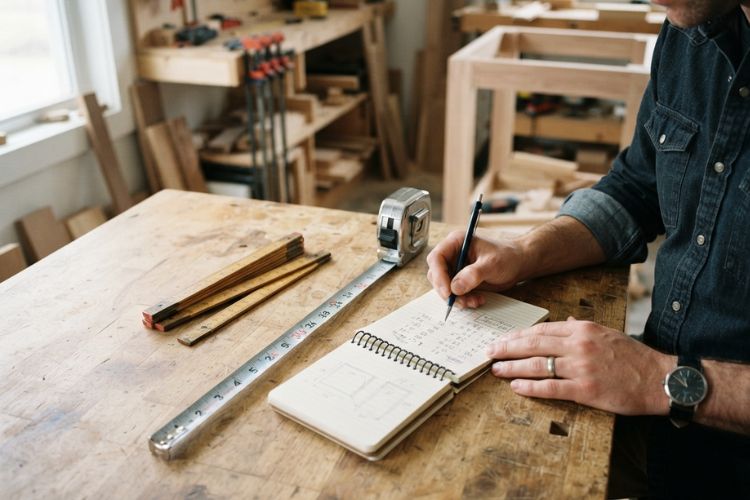
Before placing an order, look at the entire dining setup instead of relying on one or two numbers. This is especially useful when ordering custom wood furniture, since the table can be planned around the room, chairs, and seating arrangement rather than a preset size.
Comparing these details with standard dining table dimensions gives you a useful reference while still allowing the final table to suit your particular room.
So, what size dining table do I need? The answer is the size that gives your usual group enough room to eat comfortably without making everyone else squeeze around the furniture.
For quick planning, a dining table size for 6 may be around 60 to 72 inches, while a dining table size for 8 often falls around 84 to 96 inches. A dining table size for 10 may extend from roughly 96 to 120 inches. Your chairs, room layout, and base can shift those ranges.
Crooked Tree Woodworks creates handcrafted dining tables designed around individual spaces and everyday needs. Instead of settling for a table simply because its listed size is close enough, you can choose proportions that suit your room, seating needs, and the way the table will actually be used.
How much room should I leave around a dining table?
Around 36 inches is a useful starting point between the table and a wall or nearby furniture. More room may be helpful where people frequently walk behind seated guests.
How much table space does each person need?
Around 24 inches of table edge per diner works as a general starting point. Wider chairs and more generous place settings may require additional room.
What size dining table works for four people?
A rectangular table around 48 inches long can work well for four people. Round and square options can also be practical depending on the room.
How wide should a dining table be?
Many rectangular dining tables are roughly 36 to 44 inches wide. The right width depends on room size and how much space you want for serving dishes in the center.
Is a 36-inch-wide dining table wide enough?
Yes, 36 inches can provide enough space for place settings on both sides and some room in the middle. Larger serving setups may benefit from additional width.
Do table legs affect seating capacity?
Yes. Legs or supports can block otherwise usable chair positions. Check where the base sits before deciding how many people the table can comfortably seat.