
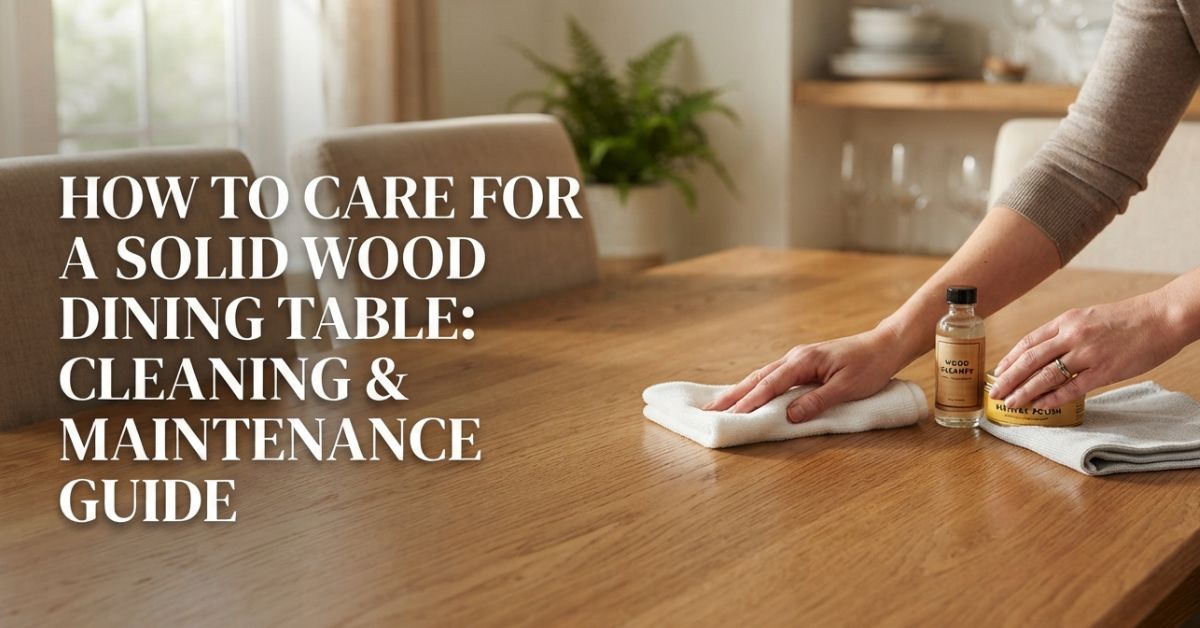
A solid wood dining table is made to be used. Family dinners, morning coffee, homework, celebrations, and everyday conversations all happen around it. Naturally, that means the surface will deal with spills, crumbs, hot dishes, fingerprints, and the occasional scratch.
Good Solid Wood Dining Table Care does not require a cabinet full of special products. A few sensible habits can help the wood and its finish hold up beautifully over the years. If you are wondering how to care for a solid wood dining table, the best place to start is with the finish, followed by gentle cleaning and protection from everyday damage.
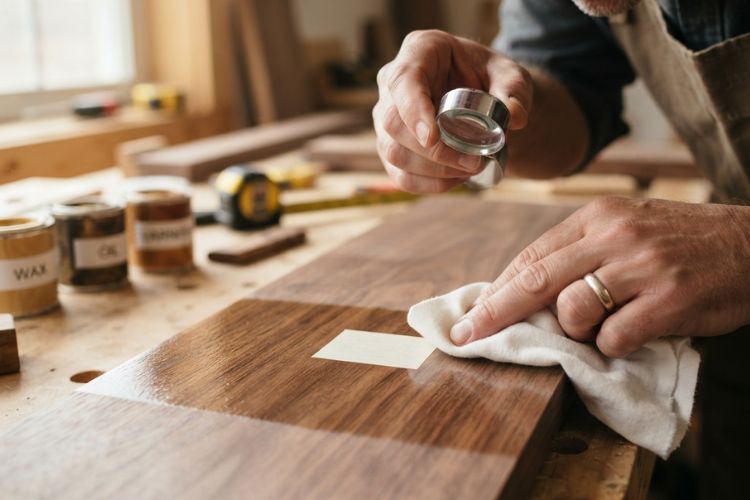
Before reaching for a cleaner or furniture polish, find out what type of finish is on your table. Solid wood tables may be protected with oil, hardwax oil, lacquer, wax, or another sealed finish. Each one can respond differently to cleaning and maintenance products.
This matters because dining table finish maintenance should match the finish already on the wood. Adding an oil or wax simply because the table looks a little dull may not help. In some cases, it can leave residue or affect the appearance of the surface.
If you know the table maker, follow their care recommendations first. You can also learn more about the Best Wood for a Custom Dining Table when comparing how different hardwoods look and perform in a dining space.
Regular cleaning does not need to be complicated. For crumbs and light dust, wipe the tabletop with a clean microfiber or other soft, lint-free cloth. Try to pick up loose particles instead of rubbing them across the surface, as some may leave small marks.
For more thorough wood dining table cleaning, use a soft cloth that is slightly damp rather than soaking wet. A little mild soap may also work for fingerprints or food residue, depending on the type of finish on your table.
At Crooked Tree Woodworks, the natural grain and character of solid wood are an important part of every table, so gentle cleaning helps keep those details looking their best. Once you finish, dry the surface with a clean cloth and check live edges or natural grooves where crumbs and moisture can easily collect.
A spilled drink does not have to become a permanent reminder of dinner. How quickly you respond can make a difference.
Blot spills rather than wiping them across a larger area. Coffee, wine, sauces, oils, and water should all be removed as soon as reasonably possible. Once the spill is gone, gently clean the area as recommended for your table’s finish and dry it completely.
Prompt cleanup is one of the easiest parts of Solid Wood Dining Table Care because it prevents moisture and food from sitting against the finish longer than necessary. If a mark remains, avoid scrubbing it aggressively. Repeated rubbing may cause more noticeable damage than the original spill.
A table does not need to be covered all day to stay in good condition. A few small barriers can protect the areas that receive the most use.
Use coasters under cold drinks and hot mugs. Trivets or heat-resistant pads should go beneath hot cookware and serving dishes. Placemats can also help when plates, bowls, and cutlery are being moved around during meals.
If you are learning how to protect a wooden dining table, also look beyond dinnerware. Add felt pads beneath vases, lamps, decorative bowls, or other objects that stay on the tabletop. Avoid dragging heavy or rough items across the surface.
These habits are especially useful for Custom Dining Tables, where the natural grain and individual character of the wood are a major part of the finished piece.
More cleaning power is not necessarily better for wood. Bleach, ammonia-based products, abrasive powders, scouring pads, and strong household sprays may damage or dull certain finishes.
Steam cleaners are another poor choice. They introduce heat and moisture, neither of which needs to be forced into a wooden surface.
Effective hardwood table care is usually much gentler. Start with the least aggressive cleaning method that can do the job. Avoid experimenting with online stain-removal tricks until you know whether the ingredients are safe for your particular finish.
Real wood responds to the conditions around it. Changes in indoor humidity can cause it to gain or lose moisture, resulting in small amounts of natural movement.
Good solid wood table maintenance therefore extends beyond wiping the surface. Try to avoid extreme swings in humidity, particularly if the room becomes very dry during winter or unusually humid at another time of year.
It also helps to keep the table away from direct sources of strong heat, such as fireplaces, radiators, and heating vents. A reasonably stable indoor environment is better for both the wood and its joinery over the long term.
Sunlight can gradually change the color of wood and its finish. That change may happen slowly enough that you do not notice it from one day to the next.
If strong direct sunlight reaches the table for several hours, curtains or blinds can reduce exposure. It is also worth moving bowls, runners, and other decorations from time to time. Otherwise, covered and uncovered sections may age at different rates.
Some color change is a normal part of Solid Wood Dining Table Care and ownership. The goal is not to stop wood from aging naturally, but to prevent one part of the surface from receiving much more exposure than another.
Not every mark needs sanding or refinishing. First, gently clean the area to make sure you are actually looking at a scratch rather than transferred material or dried residue.
For light surface marks, check the maker’s recommended repair method. Avoid sanding one small spot without understanding the original finish because the repaired area may end up with a different sheen or color.
Deep gouges, exposed wood, cracked finishes, or larger damaged areas are different. Professional repair may be the better option, especially for valuable custom wood furniture where matching the existing finish matters.
There is no universal rule saying every solid wood table needs oil every few months. Some finishes require periodic renewal, while others should not be routinely oiled at all.
Instead, look at the actual condition of the surface. Dull patches, worn areas, or sections where the finish appears noticeably different may indicate that attention is needed.
Proper dining table finish maintenance means using a product that is compatible with what is already there. If you are unsure, contact the furniture maker before applying wax, oil, polish, or a refinishing product.
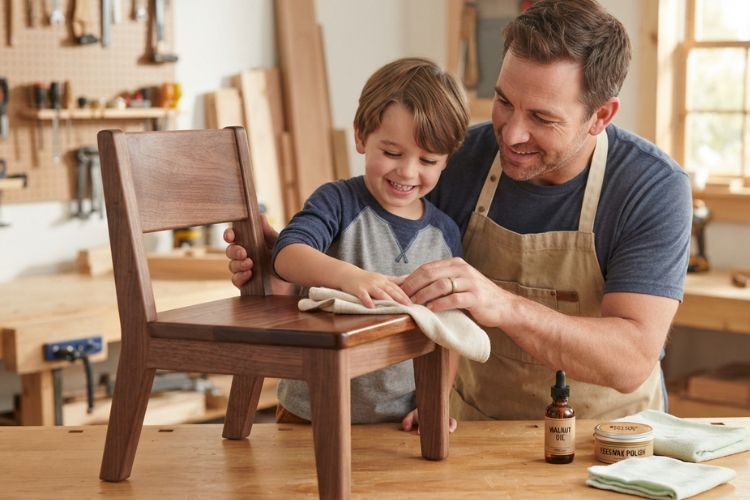
You do not need to inspect your dining table every day. Basic habits are usually enough.
After meals, clear away crumbs and deal with spills. When fingerprints or food residue appear, clean them using a method suited to the finish. Every so often, check the tabletop, edges, base, and frequently used areas for changes.
This approach makes Solid Wood Dining Table Care easier to maintain because there is no complicated schedule to remember. It also allows you to catch developing problems before they become harder to address.
Seasonal changes are a useful reminder to check the room as well. If indoor air becomes extremely dry or humid, consider whether the conditions need adjusting. This small step can support long-term solid wood table maintenance.
A solid wood dining table will naturally show small signs of the meals, conversations, and gatherings that happen around it. Slight color changes and everyday wear are part of owning real wood and do not always mean the table is damaged.
Good hardwood table care is simply about preventing avoidable damage while still enjoying the table every day. Once you know how to care for a solid wood dining table, the process becomes much easier. Gentle wood dining table cleaning, quick spill cleanup, and regular Solid Wood Dining Table Care can help the wood and its finish stay in good condition for years.
Can I use dish soap on a solid wood dining table?
A small amount of mild soap may be suitable for some finishes, but always check the furniture maker’s instructions first. Use as little moisture as possible and dry the surface afterward.
Do solid wood dining tables need to be oiled?
Not necessarily. It depends on the finish. Some oiled finishes may need occasional renewal, while sealed surfaces can require completely different care.
What should I put under hot dishes on a wood table?
Use a trivet or heat-resistant pad. If you are unsure how to protect a wooden dining table during meals, keeping hot cookware away from direct contact with the surface is a good place to start.
When should a wooden table be professionally refinished?
Consider professional help when the finish is badly worn, large areas of bare wood are exposed, or deep scratches and damage cannot be handled with normal Solid Wood Dining Table Care.