

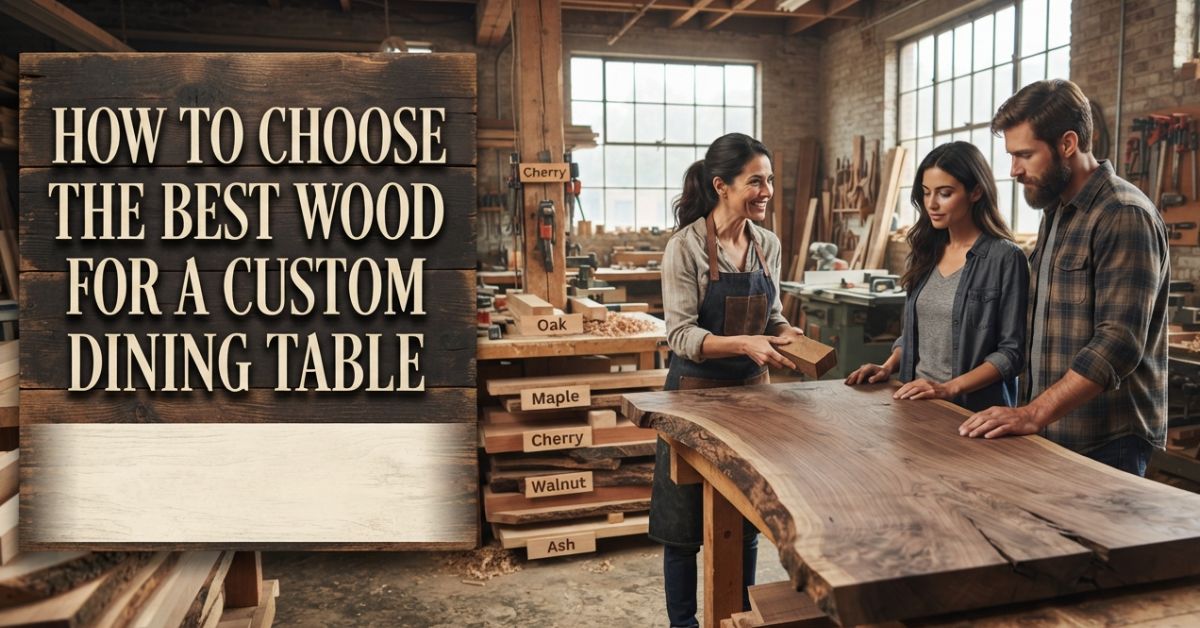
A dining table may stay in your home long after the chairs, wall colors, and décor around it have changed. That makes the wood you choose worth thinking about carefully. Finding the Best Wood for Custom Dining Table projects is less about following a popular choice and more about picking something that fits the way you live.
The best wood for dining table use should feel right in your space and hold up to what happens there every day. Grain, color, hardness, natural markings, slab size, and the way the wood changes with age can all help narrow down the right choice.
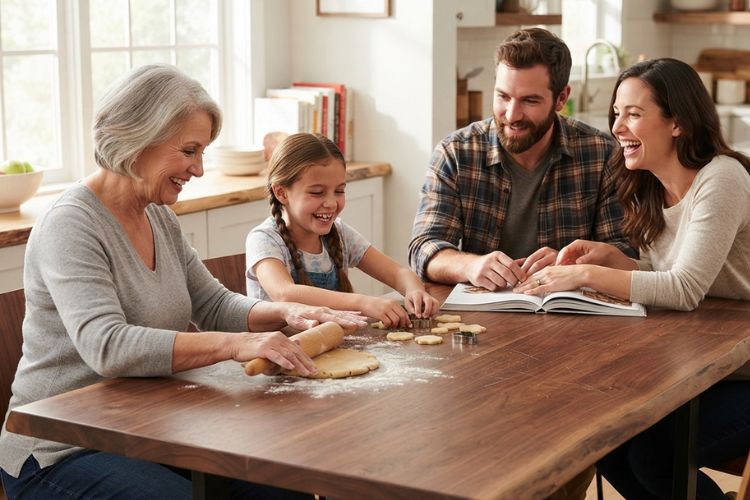
Think about what happens at your table each day. A dining space used by children for meals and homework has different needs from one mainly used for weekend dinners or special gatherings. Crafts, work, frequent guests, and everyday family life can all affect which wood makes the most sense.
Wood selection should come down to both appearance and everyday use. White oak, hard maple, and hickory are durable choices, while walnut offers a deeper color and flowing grain. The best hardwood for dining table use is not always the hardest option. A durable wood for a dining table should have enough strength for your household while still giving you a look you will enjoy for years.
Some woods sit comfortably in the background. Maple is a good example, with its light color and fairly even grain. Cherry feels warmer and develops a richer tone as the years pass. These woods are worth considering when you want the table to blend easily with the rest of the room rather than compete for attention.
Then there are dining table wood types that are harder to overlook. White oak has more visible grain, while Parota, Monkeypod, and figured walnut can bring bold lines and natural variation across the tabletop. If you like exotic wood home furniture, choosing a slab with its own knots, grain shifts, and color changes can give the dining room a look that feels much more personal.
Paint colors, rugs, chairs, and other décor may change several times over the years, but a well-made dining table can stay much longer. That makes it worth thinking beyond your current room setup. Choose a wood that can still feel at home even if your style or surrounding furniture changes later.
Walnut adds rich contrast, white oak suits many neutral palettes, maple feels lighter, and cherry deepens with age. When selecting the Best Wood for Custom Dining Table designs, ask whether you would still enjoy the wood if the rest of the room looked different five years from now.
Hardness numbers can be helpful, but they should not decide everything. On the Janka scale, black walnut comes in at around 1,010 lbf, followed by white oak at 1,360, hard maple at 1,450, and hickory at about 1,820. That gives you an idea of how well each wood can resist dents, but a higher number does not automatically mean a better dining table.
There is more to consider once the wood becomes part of a finished piece. The way the table is built, how the joints are made, the finish, and the amount of daily use all matter. The best wood for furniture should feel right for the design while offering the strength needed for regular use. With custom wood furniture, good material and careful craftsmanship matter just as much as a hardness rating.
No two natural wood slabs look exactly the same, even when they come from the same species. One walnut slab may have bold grain and visible knots, while another may look smoother and more even. Differences in sapwood, figure, color, and natural markings give each slab its own appearance.
When choosing the Best Wood for Custom Dining Table projects, look at the actual boards or slab whenever possible. Check grain movement, natural edges, dimensions, and color. With a custom hardwood dining table, these individual details become part of the finished piece instead of being hidden.
Real wood does not stay visually frozen. Cherry generally becomes richer and deeper, while walnut can mellow with time and light exposure. Daily use can also change the surface slightly.
This matters when comparing dining table wood types. Choose a wood whose natural aging you can appreciate.
A species may look perfect in a sample but be difficult to source in the dimensions you need. Long tables need enough usable length, while wide single-slab tops require suitably large pieces.
Availability matters even more with live-edge designs and uncommon species. A custom dining table usa project can offer more choice than fixed retail sizes, but suitable material still has to be available. For a large custom hardwood dining table, slab dimensions can affect design and price.
Species is only part of the price. Thickness, size, figure, grade, sourcing, and usable material can all change the cost. A large slab with unusual grain may cost much more than a standard board of the same species.
Instead of assuming the highest-priced option is the best hardwood for dining table construction, look at what you are actually getting for the price. Consider the quality of the wood, its natural features, size, and how well it suits your design. The same approach can help when choosing the best wood for furniture elsewhere in your home.
Start by narrowing your options to three woods instead of comparing too many at once. Pick one because you love its appearance, another because it suits everyday use, and a third that is outside your usual style. Looking at three different choices side by side can make the final decision much easier.
Compare them side by side for color, grain, hardness, size, and price. This makes it easier to find a durable wood for dining table use without forgetting the style that first caught your attention.
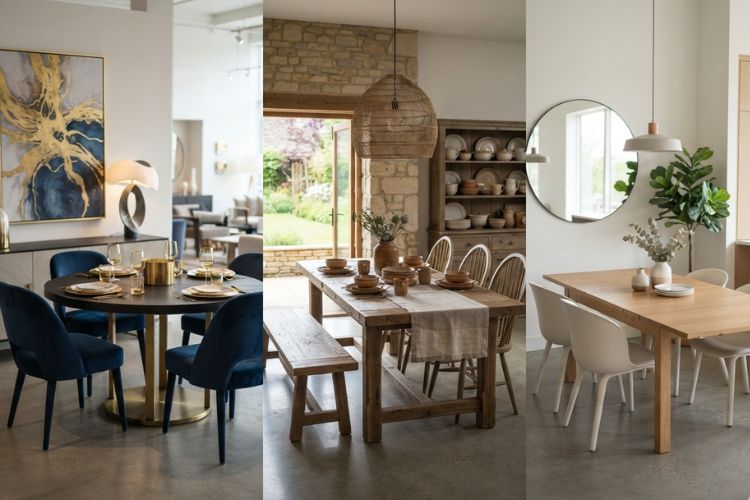
For a busy family space, consider white oak, hard maple, or hickory. Black walnut or Claro walnut can create a darker statement. Maple and white oak suit lighter rooms, while Parota or Monkeypod highlight slab character.
There is no single best wood for dining table use in every home. Your choice should reflect how the room is used and what you want the table to bring to it.
Choosing the Best Wood for Custom Dining Table projects starts with your priorities. Think about daily use, appearance, table size, and how you want the wood to age. The Best Wood for Custom Dining Table use should feel suitable for both your room and routine.
Crooked Tree Woodworks works with domestic and exotic hardwoods, giving each table its own natural character. Instead of searching for one universal winner, focus on the slab, strength, grain, and proportions that can make the finished table feel right in your home.
Which wood works well for a dining table used every day?
White oak, hard maple, and hickory are good choices for tables that see regular use. They are strong enough to handle busy family meals, homework, and gatherings. Walnut is another popular option if you prefer a warmer, darker look.
Should I choose wood based on hardness alone?
No. Hardness is useful, but it should not make the whole decision for you. Grain, color, table size, natural movement, and how you plan to use the table matter too.
What should I look for when viewing a wood slab?
Look beyond the overall color. Pay attention to the grain pattern, knots, sapwood, natural edges, and changes in tone across the slab. These details will be much more noticeable once the wood becomes a large tabletop.
Do different woods change color as they age?
Yes. Natural wood can change with time and light exposure. Cherry usually develops a deeper tone, while walnut may become lighter or softer in color. These changes are normal and can add character to the table.
Is an exotic wood a good choice for a dining table?
It can be if you want unusual grain, color, or natural character. The better question is whether that particular wood suits your table size, daily use, design preferences, and budget.