

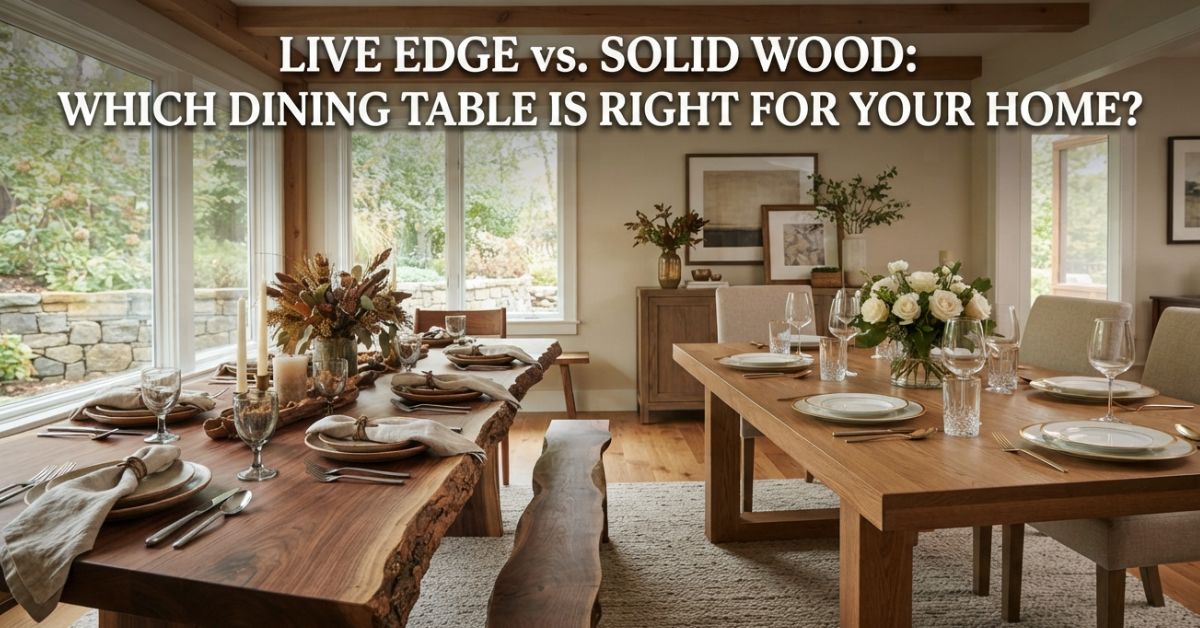
A dining table is one of those pieces of furniture you notice every day. It holds family dinners, morning coffee, celebrations, conversations, and sometimes even work or homework. When you plan to keep a table for years, choosing the right material and design matters.
One common comparison is live edge vs .solid wood, but these terms can be slightly misleading. A live edge dining table can also be made from solid wood. The main decision is usually between the natural, irregular edge of a wood slab and the cleaner lines of a traditional wood table.
So, which one belongs in your home? Looking at their design, durability, care, cost, and overall character can make the choice easier.
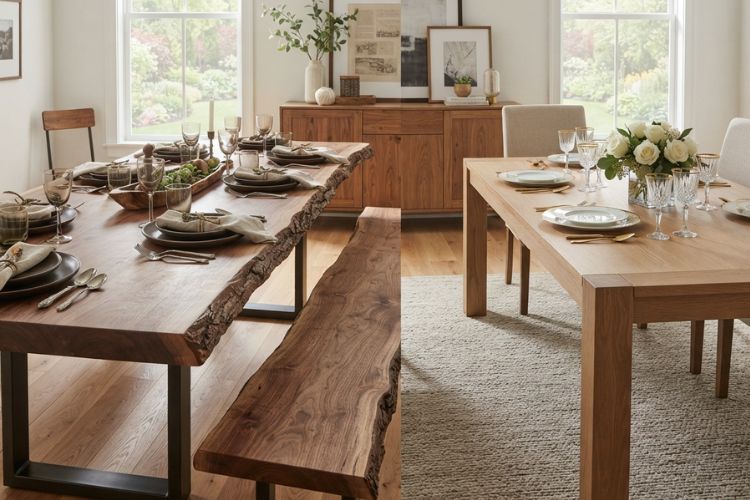
Live edge describes a design technique rather than a separate type of wood. Instead of cutting every side into a perfectly straight line, the natural shape of the tree is preserved along the edge.
Solid wood refers to the material itself. A solid wood dining table is constructed from real wood rather than particleboard, MDF, or similar engineered materials covered with a decorative surface.
This means live edge vs. solid wood is not technically an either-or decision. A table can be both. When homeowners compare the two, they are generally choosing between a natural live edge design and a traditional straight or finished edge.
The biggest attraction of a live edge dining table is that the wood is allowed to show its individual character. Natural curves, grain patterns, knots, and changes in tone become part of the design rather than details that need to be hidden.
Every slab develops differently, so no two tables will have exactly the same appearance. A live edge wood table may have a subtle natural curve or a much more dramatic edge depending on the slab selected.
This individuality has made live edge furniture popular in homes where people want natural materials to have a stronger visual presence. Instead of simply filling the dining area, the table can become a central feature of the room.
Traditional solid wood tables highlight the beauty of real wood in a more structured way. Their edges are generally cut and finished into controlled shapes, creating a cleaner and more symmetrical appearance.
This makes a solid wood dining table easy to incorporate into many interiors. Depending on the wood, finish, dimensions, and base, it can work in traditional, contemporary, transitional, or minimalist rooms.
A quality handcrafted dining table also allows the natural grain to remain visible without making irregular edges the main design feature. For homeowners who appreciate wood but prefer clean lines, this can provide the right balance.
Both styles can work well for everyday dining. The difference becomes clearer when you consider how you want the table to look, feel, and function in your home.
A live edge dining table draws attention to the original shape and character of the wood. Natural variation is expected, which means knots, curves, grain, and color differences can contribute to the finished appearance.
Traditional tables offer more visual consistency. Their straight edges and controlled proportions can make the dining area feel more structured.
Neither approach is automatically better. The choice depends on whether you want the wood itself to become a prominent design feature or prefer a more uniform look.
There is no standard rule that says one design will always cost more. Price can change according to the wood species, slab dimensions, availability, table size, finish, base, and amount of craftsmanship involved.
Customization can also affect the final price. The same considerations apply when commissioning other large pieces, such as a custom wood conference table, where dimensions, materials, and design requirements influence the work involved.
Do not judge durability by the edge alone. Wood species, thickness, construction, joinery, finish, and craftsmanship have a much greater impact on how a table performs.
A properly constructed live edge dining table can handle regular meals, gatherings, and daily family use. The same is true of a well-built traditional table.
When comparing tables, look at how they are made rather than focusing only on appearance. A carefully built handcrafted dining table should combine attractive wood with construction designed for regular use.
Wood furniture does not usually require complicated daily care. Wiping spills quickly, avoiding standing moisture, and protecting the surface from excessive heat can help maintain its appearance.
The irregular sides of a live edge table may require a little extra attention when cleaning because they do not have the same smooth, straight profile as conventional edges.
The finish also matters. Always follow the furniture maker’s care instructions rather than using harsh cleaners that could affect the surface. Proper maintenance can help both traditional pieces and live edge furniture age gracefully.
The wood itself has a major influence on how the finished table looks. Different species offer their own grain patterns, tones, natural markings, and levels of hardness.
Consider the room around the table before choosing. Flooring, cabinetry, chairs, and other wood finishes can influence whether a lighter, darker, subtle, or dramatic grain works best.
With a custom wood dining table, the species can be selected as part of the overall design rather than being limited to whatever is available in a standard furniture collection. Someone looking for a more distinctive material may also consider a custom exotic dining table where the grain and natural characteristics become an important part of the finished piece.
Do not assume natural edges only belong in rustic spaces. A live edge wood table can bring warmth into a modern room, while a metal or streamlined base can create a more contemporary or industrial appearance.
Traditional finished edges are equally flexible. They can complement classic interiors but also work well in modern spaces where simple lines are preferred.
Think about what is already happening in your dining room. If the space is very clean and minimal, natural wood can provide contrast. If the room already contains several strong textures and patterns, a more restrained table design may create better balance.
Start with size. Measure the dining area and leave enough room for chairs to pull out comfortably. Think about how many people sit at the table every day as well as how many guests you typically host.
Next, consider wood species, edge style, finish, thickness, base design, and how much natural variation you like.
Choosing custom wood furniture can be helpful when standard dimensions or designs do not work for your room. If you are considering a higher-end piece, Crooked Tree Woodworks’ guide to Buying Luxury Furniture also explains factors worth considering before making a larger furniture investment.
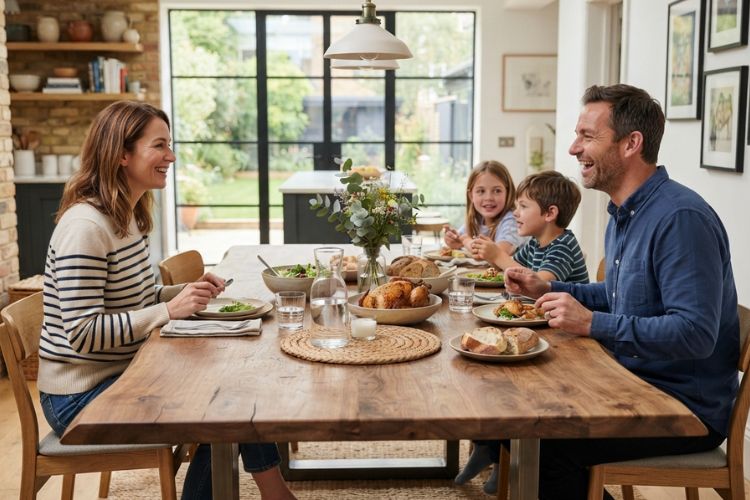
A custom dining table gives you more control over how the finished piece works in your space. Instead of adapting your dining room to a predetermined table, dimensions and design details can be chosen around your needs.
With a custom wood dining table, you can consider the wood, size, edge treatment, finish, and base together. This is particularly useful for unusual room dimensions or when you have a specific design in mind.
The appeal of custom wood furniture is also personal. Rather than purchasing an identical mass-produced piece, you receive furniture shaped around your space and preferences.
A dining table has to do more than look good in a showroom. It needs to fit the room, handle everyday use, and still feel like a piece you will be happy to live with years from now.
That is what makes the choice so personal. The uneven edge and visible grain of a live edge dining table bring more of the tree’s original character into the room. A traditional solid wood table takes that same natural material in a cleaner, more structured direction.
Whichever design feels right, spend time looking at the wood itself and how the table is built. Good materials, careful construction, and skilled craftsmanship are what give a dining table its lasting place in a home.
Can a live edge table also be solid wood?
Yes. “Live edge” describes the natural edge treatment, while “solid wood” describes the material. A table can therefore be both live edge and solid wood.
Are live edge tables good for everyday dining?
Yes. A properly constructed and finished live edge table can be used for everyday meals, entertaining, and other normal household activities.
Which type of dining table is easier to maintain?
Both are relatively easy to care for. Natural edges may need slightly more attention during cleaning, while the finish and wood species also influence maintenance.
Does a live edge table cost more?
Not always. Cost depends on the wood species, slab, dimensions, base, finish, customization, and craftsmanship rather than edge style alone.
How long can a solid wood dining table last?
A quality wood table can last for many years with appropriate care. Construction, wood species, environment, frequency of use, and maintenance all affect its lifespan.