


The most expensive table you’ll ever own is the one you replace three times.
A price tag tells you what something costs today. It says very little about how that piece will look after ten years of dinners, homework and holiday gatherings. Plenty of furniture is expensive. Far less of it is genuinely luxurious. This guide shows you how to tell the difference before you spend.
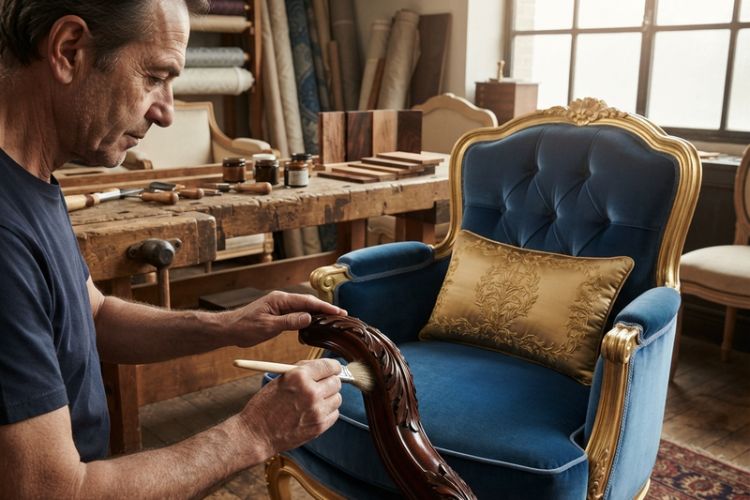
True luxury furniture comes down to three things: materials, construction and longevity. A designer label, a showroom spotlight and a high price can all exist without any of them.
Real luxury means:
If a seller can’t explain any of these, you’re paying for branding.
Photos flatter everything. When you’re looking at high end furniture, use your hands and eyes the way a craftsman would.
Pull out a drawer or look where a leg meets the frame. Dovetails, mortise-and-tenon joints and properly fitted dowels signal real woodworking. Staples, visible glue squeeze-out and a few lonely screws signal shortcuts.
Ask directly: is it solid wood, veneer over plywood, or veneer over particleboard? Veneer isn’t automatically bad, but it limits how often a surface can be sanded and refinished. Look at the edge of a tabletop. If the grain on the top doesn’t continue down the side, it’s likely a thin layer.
Run your hand across the surface. A quality finish feels smooth and even, with no rough patches, drips or cloudy spots. Ask what the finish is and how it should be maintained.
The underside is where cost-cutting hides. Well-made pieces are finished, or at least sealed, on the bottom too. This helps the wood respond evenly to humidity and reduces the risk of warping.
Solid wood furniture can be sanded, refinished and repaired many times over its life. A scratch on a solid walnut tabletop is a weekend fix. The same scratch on a laminate surface is permanent.
Solid wood also ages in a way people tend to love. Cherry deepens in color, walnut mellows, and oak develops a soft patina. That’s why so many heirloom tables are solid hardwood. If you’re weighing species, our comparison of walnut vs. oak dining tables breaks down how each one looks and wears.
Walk away, or at least ask harder questions, if you notice:
Quality furniture should come with clear answers, not marketing language.
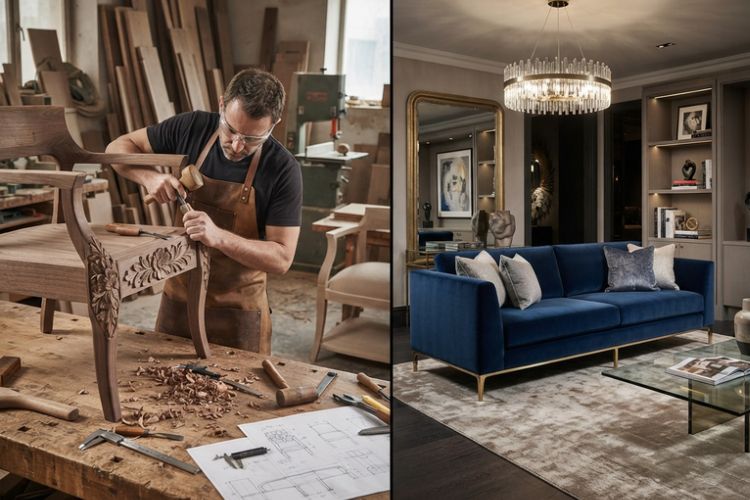
Showroom furniture is built to standard sizes for an average room. Custom furniture is built for your room. That difference matters most with large statement pieces such as dining tables, desks and conference tables, where an extra six inches can make or break a layout.
Custom also gives you control over the details that make a piece last: the exact wood, the slab, the base, the edge and the finish. Browse our luxury handcrafted wood furniture to see how one-of-a-kind slabs, stone inlays and steel bases come together in finished pieces.
Bring this list to any showroom or maker consultation:
A maker of genuine handmade wood furniture will be happy to answer every one of these. Hesitation is an answer too.
A well-built table used for 40 years usually costs less per year than a budget table replaced every five. When you compare prices, divide by how long you expect to keep the piece. Luxury often turns out to be the practical choice.
Is luxury furniture worth the money?
It is when the higher price buys better materials and construction. Solid wood, real joinery and a repairable finish can keep a piece in use for decades, which lowers its true cost over time.
How can I tell if furniture is high quality?
Check the joinery, confirm whether the wood is solid or veneered, inspect the finish, and look underneath. Sturdy, quiet, well-finished pieces with clear material details are usually well made.
Is solid wood furniture better than veneer?
For pieces that see daily use, such as dining tables and desks, solid wood is generally the better long-term choice because it can be sanded and refinished multiple times.
Should I buy custom or ready-made luxury furniture?
Ready-made works for standard spaces. Custom is worth it when size, wood choice or design matter, especially for statement pieces like dining and conference tables.
At Crooked Tree Woodworks, every piece is built by hand in Salt Lake City from hardwood slabs selected for grain, character and stability. No assembly line and no templates, just furniture made to be handed down.
Commission your piece or talk to a wood specialist about your project.