


Walnut and oak are two woods that can give the same dining room a completely different character. Walnut is known for its deep brown color and smooth grain, while oak is usually lighter, harder, and more textured. Both are widely used for quality furniture, so the decision often depends on how you want the table to look and how it will be used.
When comparing a walnut vs oak dining table, it helps to look beyond the initial appearance. Durability, scratches, maintenance, aging, price, and design all matter when you are choosing a table that may stay in your home for many years.
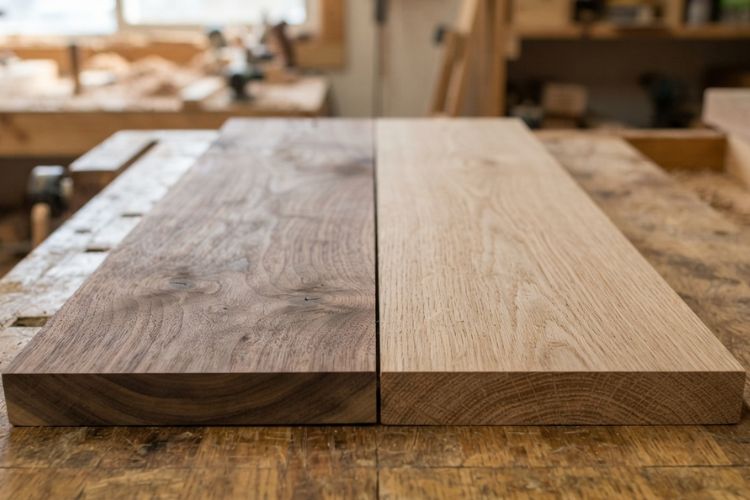
Walnut and oak each bring a different look and feel to a dining table. Walnut is naturally darker, with warm brown shades and grain that can move from straight to more flowing patterns. Oak is usually lighter and has a stronger, more visible grain.
There is also a difference in hardness. Oak handles dents and knocks better, while walnut has a slightly softer surface. In a walnut vs oak comparison, these differences matter because they influence how the table looks when new and how it wears with regular use.
The oak vs walnut color difference is easy to notice. A walnut dining table brings deeper brown shades into a room and can create contrast against light walls, floors, or chairs. Natural walnut can also contain lighter streaks and variations that make each tabletop different.
Oak has a brighter appearance and a stronger grain. White oak generally has beige to medium-brown tones, while red oak often has warmer reddish undertones. When comparing oak vs walnut color, look at the wood alongside other materials already in the room rather than viewing it on its own.
Oak is harder than black walnut, making it more resistant to dents and impacts. That extra hardness can be useful for an oak dining table used for daily meals, homework, entertaining, and other activities.
Walnut is softer, but that does not mean it lacks durability. Quality construction and a suitable finish can allow walnut furniture to remain in use for decades. With hardwood dining tables, the strength of the joints, thickness of the top, finish, and regular care are just as important as the species itself.
Durability matters even more when you are looking for heirloom wood furniture that may eventually be passed from one generation to another.
Natural wood will eventually show some evidence of everyday life. Walnut can dent more easily because it is softer than oak, and certain scratches may be more noticeable against its dark surface. Oak provides greater resistance to dents, while its pronounced grain can help minor marks blend into the tabletop.
The same difference appears when looking at red oak vs. walnut. Red oak is harder, but walnut offers the darker coloring and smoother grain that many people want in a dining table. The amount of daily use should be part of this decision, especially in a busy household.
There is little difference between oak and walnut when it comes to basic cleaning. Spills should be wiped up promptly, abrasive cleaners should be avoided, and hot cookware should not be placed directly on an unprotected tabletop.
The finish often makes a bigger difference to maintenance than the species of wood. When buying a walnut vs oak dining table, ask what finish has been used and how the maker recommends cleaning it. Following those instructions will help protect the surface and preserve the natural appearance of the wood.
Wood does not keep exactly the same color throughout its life. Walnut commonly becomes lighter and warmer with prolonged exposure to light, while oak may gradually deepen or shift in tone depending on the species and finish.
This natural change is worth remembering when comparing oak vs walnut color. The shade you see when the table is new may look slightly different several years later. For many people, these gradual changes are part of what makes real wood furniture more interesting as it ages.
Walnut usually costs more than oak, but prices vary depending on the wood quality, size, grain, and availability. Large slabs or unusual grain patterns can also increase the price.
The cost of a walnut vs oak dining table also depends on its size, base, edge style, finish, and level of custom work. Instead of comparing wood prices alone, look at the quality and construction of the finished table.
Walnut works particularly well in contemporary, modern, and mid-century-inspired furniture. Its darker tone can make the tabletop stand out, while its flowing grain often works well with simple bases and clean lines.
Oak can move easily between traditional and contemporary interiors. Its visible grain adds texture, while different finishes can take the wood from a natural rustic appearance to something much cleaner and more modern. Both species can also be used for live edge hardwood dining tables, where the natural shape of the wood becomes part of the design.
Room size matters too. Looking at modest living space furnishing ideas can be useful when deciding how the table’s color, dimensions, and visual weight will work in a smaller dining area.
Walnut is worth considering if you are drawn to deeper brown tones, smooth grain, and natural variation. A walnut dining table can become a strong visual feature in a room without needing an elaborate table design.
In the walnut vs oak comparison, walnut may suit you better when its color and grain are more important to you than having the harder surface of oak.
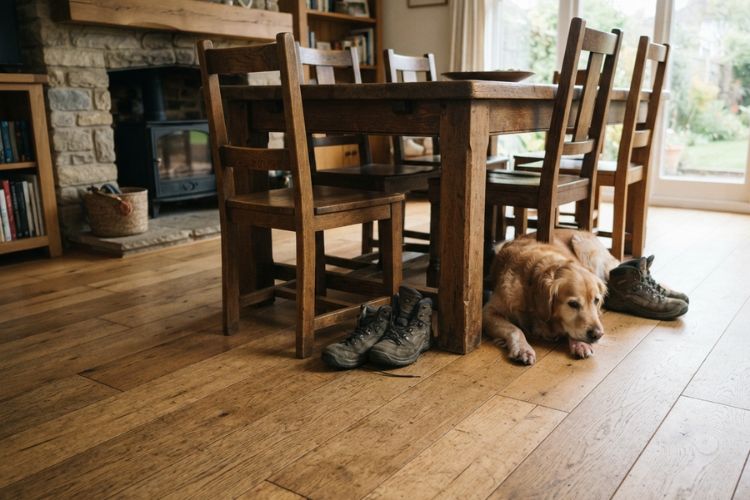
Oak can be a practical choice for a table that will see frequent everyday use. Its harder surface offers greater resistance to dents, while its visible grain gives the tabletop plenty of natural character.
The red oak vs walnut decision also comes down to appearance. Red oak is lighter with warmer undertones and a stronger grain, while walnut provides deeper brown shades. If durability and a lighter natural look are priorities, oak deserves serious consideration.
A dining table becomes part of everyday life, so the wood needs to work for more than the first impression. Oak offers greater hardness and a pronounced grain, while walnut provides deeper coloring and a smoother visual character.
Before settling on a walnut vs. oak dining table, look at real samples if possible. Pay attention to the grain, color, finish, and how each wood works with the room around it. Both can produce beautiful, long-lasting tables; they simply bring different qualities to the finished piece.
Is walnut harder than oak?
No. Black walnut is softer than both white oak and red oak. It is still strong enough for dining furniture, but oak offers greater resistance to dents.
Does walnut scratch more easily than oak?
Walnut can show scratches and dents more easily because it is softer. The finish and how the table is used will also affect visible wear.
Which lasts longer, a walnut or oak dining table?
Both can last for decades with proper care. Construction quality, finish, environment, and maintenance have a major influence on how long hardwood dining tables remain in good condition.
Is walnut more expensive than oak?
Walnut is generally more expensive than commonly available oak. Prices can change according to wood grade, size, availability, and the material selected for the table.
Which is better for an everyday dining table?
Oak’s harder surface can be useful for heavy everyday use. Walnut is also suitable for regular dining if you prefer its darker color and are comfortable with a slightly softer surface.