

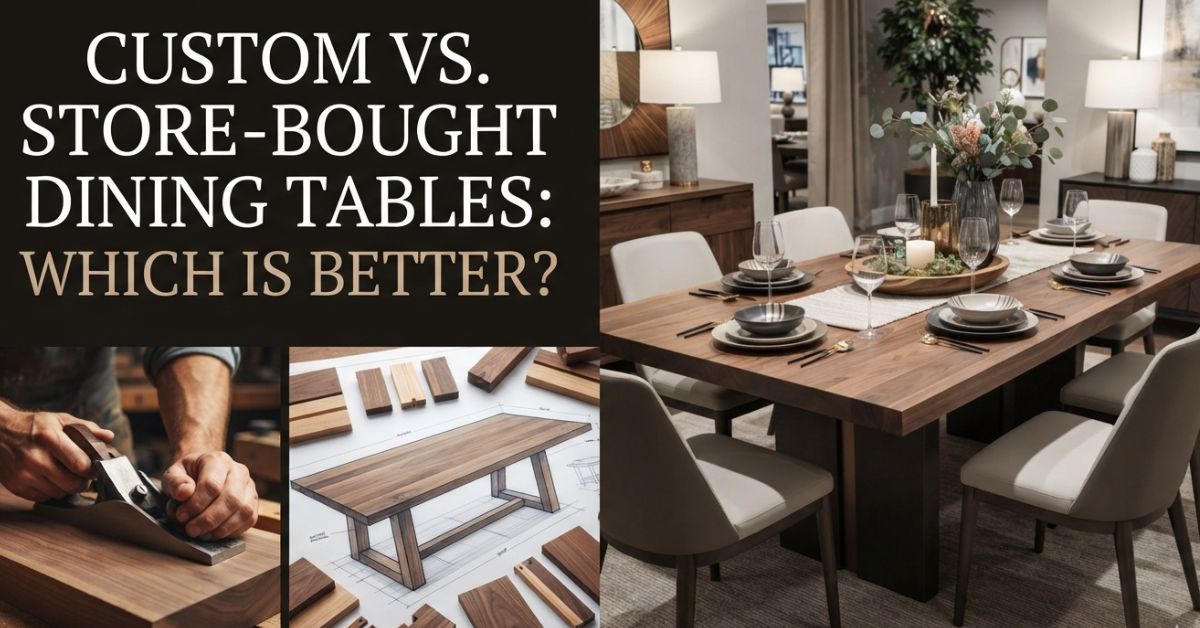
Finding a dining table is rarely as simple as choosing one that looks good. The size has to suit the room, chairs need enough space, and the material should match how you expect to use the table. Budget and delivery time can narrow the options even further.
The Custom vs Store-Bought Furniture decision comes down to those everyday details. A ready-made table may check every box, while another home may need something built to specific measurements. Looking at both choices side by side can help you decide where you are comfortable compromising and where you are not.
A store-bought table reaches the showroom or website with most decisions already made. Its measurements, material, finish, and base are fixed, although some brands may offer a few variations.
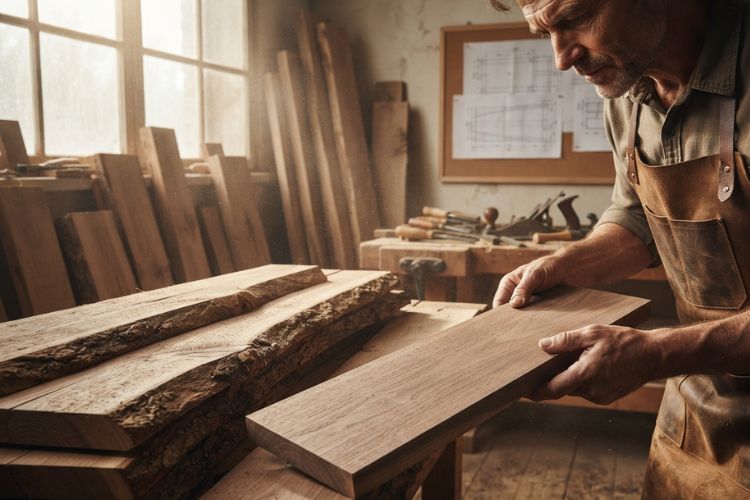
Custom furniture begins with the buyer. You can discuss the room, preferred dimensions, wood, seating needs, and design before the piece is made.
That difference shapes the custom furniture vs. mass-produced comparison. Ready-made furniture focuses on designs that can work in many homes. Custom work can respond to one particular room and buyer. Neither approach is automatically right for everyone.
A standard dining table can be a convenient choice in a straightforward room. Problems appear when the available space is narrow, unusually large, or connected to other areas of the home.
For example, a tabletop may technically fit between two walls but leave too little space once the chairs are pulled out. In an open-plan room, an oversized table might interrupt the walkway between the kitchen and living area.
With a custom hardwood dining table, the dimensions can be chosen after considering those details. You can account for chairs, walkways, nearby cabinets, and the number of people who normally sit together.
Material deserves the same attention. Learning about Wood for a Custom Dining Table can help you compare species based on appearance, grain, and the character you want for the finished piece.
A photo cannot tell you everything about a dining table. Two pieces with almost identical designs may use very different materials underneath their finishes.
Look at whether the table uses solid hardwood, veneer, MDF, particleboard, or a mixture of materials. Store-bought does not automatically mean poor quality, just as custom does not automatically guarantee excellent construction.
This makes material details important when weighing Custom vs Store-Bought Furniture. Ask what you are actually paying for rather than judging quality from appearance or price alone.
Someone working with an exotic hardwood furniture maker may also have access to distinctive wood species and grain patterns that are less common in standard furniture ranges.
Next, look at construction. A stable base, secure connections, and well-made joints matter on furniture that may be used every day.
If possible, check how the tabletop is supported and whether the table feels steady when weight is placed on it. These details give you a more useful quality comparison than the custom or retail label by itself.
Not everyone wants to choose every part of a table. Some buyers would rather see the finished design before spending money, and store-bought furniture makes that easy. For others, greater choice is one of the main custom dining table benefits. Depending on the maker, you may be able to choose:
These are practical benefits of custom furniture when standard choices keep coming close without being quite right. When considering a custom dining table vs. a store-bought piece, ask yourself which details you actually care about. If you already found the right combination, custom work may offer choices you do not need.
Ready-made dining tables are available across a wide range of prices, and many have a lower starting cost than individually built furniture. For buyers working within a firm budget, that difference can be important.
Custom work generally involves individual planning, material selection, skilled labor, and finishing. Those steps can increase the initial price.
So, is custom furniture worth it? Think about the expected years of use rather than looking only at the first payment. A lower-cost table may be completely sensible for a temporary home. Someone furnishing a long-term dining room may place more value on exact sizing, selected materials, and repair potential.
The same thinking applies when browsing a luxury wood furniture collection. Higher cost makes more sense when the material, construction, and design offer qualities that genuinely matter to you.
Timing can settle the decision before material or design does. A ready-made table that is already in stock can be useful when you have recently moved, need furniture before a gathering, or simply do not want to wait for production.
A custom order takes longer because decisions need to be finalized before building begins. The wood has to be prepared, the table constructed, and the surface finished before delivery.
That makes availability a genuine advantage in the Custom vs Store-Bought Furniture debate. Buyers with a deadline should compare lead times early rather than assuming both options can arrive within the same period.
Dining tables eventually show signs of use. What matters is what can be done when wear becomes noticeable.
Depending on its construction and finish, a custom hardwood dining table made from solid wood may allow certain scratches or worn areas to be repaired or refinished. Some veneers and engineered materials have different limits, particularly when damage goes beneath the surface layer.
Still, durability should be judged piece by piece. In a custom furniture vs. mass-produced comparison, check the material, joinery, finish, and construction rather than assuming one category will always last longer.
Your plans for the home can make one option more practical than the other. If you expect to move within a few years, are furnishing a temporary space, or want to keep your current spending lower, a store-bought table may be enough. It can also save you from investing in specific dimensions that might not work as well in your next dining room.
The benefits of custom furniture become more relevant when you are creating a space you expect to use for many years. You may want a certain wood to complement other furniture, extra length for family gatherings, or dimensions that make better use of an unusual room. In those situations, choosing the details yourself can help you get a table that suits both the space and the way your household uses it.
Before ordering anything, mark the table dimensions on the floor with painter’s tape. Then place chairs around the outline and pull them out as you would during a meal.
Walk behind the chairs. Open nearby doors and cabinets. Check the distance from a kitchen island or other furniture. If the table will also be used for work, homework, or large gatherings, consider those situations too.
This quick test can make the Custom vs Store-Bought Furniture choice easier because you are judging the table in your actual room rather than imagining its size from a product photo.

Store-bought can be the better option when you find a table with the right size, construction, material, and price and want it without a long wait.
The benefits of a custom dining table become more useful when the available choices require too many compromises. Perhaps the right size has the wrong base, or the wood you like is unavailable in the dimensions your room needs.
That brings us back to: Is custom furniture worth it? It can be when having control over fit, materials, and design matters enough to justify the additional time and cost.
Choosing between Custom vs Store-Bought Furniture is easier when you focus on your room rather than on which category sounds better. Ready-made tables offer convenience and can work perfectly when the size, material, and design already suit your needs.
Custom work offers another route when you want fewer compromises. Crooked Tree Woodworks creates handcrafted pieces for buyers who want more control over the wood, dimensions, and finished design. The right dining table is ultimately the one that works naturally in your home and makes sense for how you plan to use it.
Is a custom dining table worth the extra cost?
It may be if you need particular dimensions, materials, or design details that are difficult to find in ready-made furniture.
How long does a custom dining table take to make?
Timelines depend on the design, wood availability, workload, and maker. Ask for an estimated lead time before ordering.
Are all store-bought tables made from engineered wood?
No. Retail tables can use solid wood, veneers, engineered materials, or a combination. Check the specifications for the individual piece.
Can I choose the wood for a custom table?
Usually, wood choice is part of the custom process, although available species will vary between makers.