

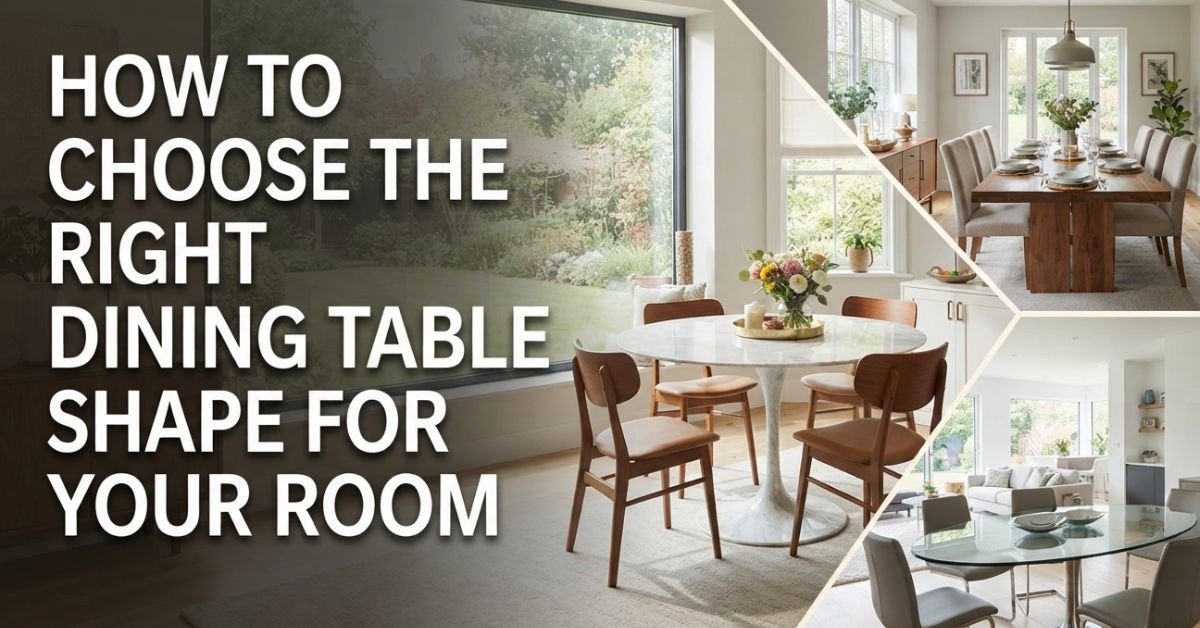
A table can have the right measurements and still feel wrong once it enters the room. Sometimes the issue is not its size at all. The shape may interrupt a walkway, leave awkward empty areas, or make the dining space look more crowded than expected.
Looking at different Dining Table Shapes before ordering can prevent these problems. Rectangular, round, square, and oval tables each use a room differently. This dining table shape guide explains how to compare them based on your layout, seating needs, and the way you actually use the space.
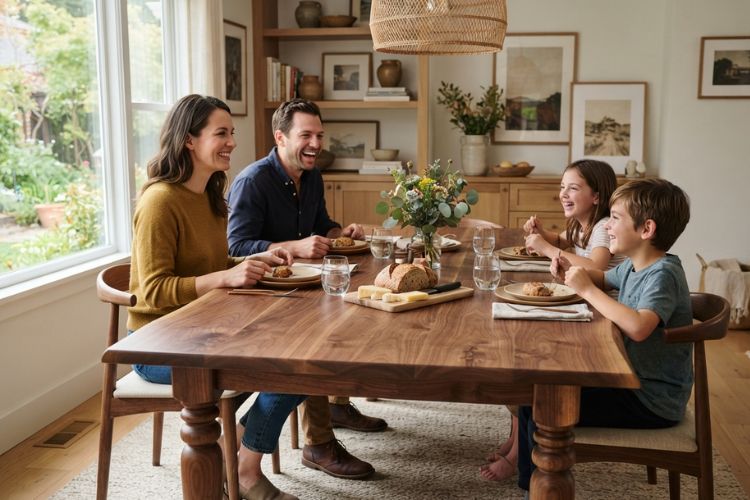
Start with the space you actually have, not just the table style you like. A long dining room usually gives a rectangular or oval table room to stretch out, while a round or square table can sit more naturally in a room with similar length and width.
Then account for everything around the dining area. A sideboard, kitchen island, doorway, or other furniture can take away usable floor space. The best dining table shape should fit around these features without making the room feel crowded or awkward.
In a smaller room, keeping a clear path around the table matters even more. The right dining table shape for small room layouts should make it easy to pull out a chair, walk past the table, and move between nearby spaces.
Picture a normal dinner rather than an empty dining room. Chairs will be pulled out. Someone may be carrying plates from the kitchen while another person gets up from the table. Cabinets or drawers may need to open at the same time.
Corners become more noticeable in these situations. A rectangular table may work perfectly when there is enough room around it, but curved ends can feel less restrictive near a busy walkway. When comparing Dining Table Shapes, walk through the routes people use most often rather than judging the table only from its position in the center of the room.
Each shape has its own strengths. Instead of choosing one because it is currently popular, consider what it brings to your particular dining area.
Rectangular tables are a natural fit for long rooms and larger households. Chairs can run along both sides, with additional seating at either end when the base allows it. The long surface also gives serving bowls, platters, and centerpieces plenty of room.
When considering a rectangle vs. round dining table, rectangular designs generally offer more flexibility for larger groups. They are also well suited to long hardwood slabs because the shape allows the grain and natural character of the wood to remain visible across the tabletop. In a small square room, however, a long rectangle can quickly dominate the available floor area.
A round table creates a very different dining experience. With no head of the table and everyone facing toward the center, conversation tends to feel more open.
Round designs often work well in breakfast areas and square rooms. Their lack of corners can also make movement easier in compact areas. For that reason, a round design is often considered when searching for the best dining table shape for small spaces.
There is a limit, though. Once the diameter becomes very large, reaching food or serving dishes in the middle becomes less convenient.
Square tables work especially well when the room has similar length and width. They provide an even arrangement for a smaller household, particularly when four people use the table regularly.
The drawback becomes clearer as the table gets bigger. Increasing both its length and width takes up considerable floor space, while the center may become difficult to use. Among the main Dining Table Shapes, square designs tend to make the most sense when the number of regular diners is relatively small.
An oval table combines features of round and rectangular designs. It still provides useful length for several diners, but the curved ends create a softer outline.
The oval vs rectangular dining table decision often comes down to seating and movement. A rectangle generally makes fuller use of its ends, while an oval can be easier to walk around in a narrower space. The curves can also make a substantial table appear less rigid within the room.
Think about who sits at the table most days, not only the number of people who visit once or twice a year. A couple or small family may have more freedom to choose a round or square design. Larger households often benefit from the length offered by rectangular and oval tables.
Chair style matters too. Wide upholstered chairs use more edge space than narrow dining chairs, while table legs may prevent a chair from sitting exactly where you expected.
A pedestal base can open up more seating positions because there are no corner legs to work around. This is why advertised seating capacity should be treated as a starting point rather than a guarantee.
Two tables can occupy similar floor areas while looking very different in the same room. Shape, thickness, and base design all influence that impression.
A long rectangle creates a strong visual line. Round tables soften rooms filled with straight walls, cabinets, and counters. Oval designs offer length without looking quite as angular, while square tables create a sense of symmetry.
Material plays a part too. A thick hardwood top naturally has more visual presence than a slim tabletop. If you are still selecting the species, comparing Walnut vs. Oak Dining Tables can help you think about how the wood itself will contribute to the finished look.
Daily meals call for a setup that feels easy. Chairs should pull out without bumping into walls or furniture, and everyone should have enough room to sit comfortably without squeezing around the table.
If guests are over often, extra tabletop space can come in handy. When weighing an oval vs. rectangular dining table, look at how you normally arrange the chairs. A rectangular top makes good use of straight sides, while an oval design gives you length with softer ends.
A round table keeps everyone facing toward the center rather than sitting in a long row. With a smaller group, this can make it easier for everyone at the table to join the same conversation.
Dinner may only be one part of the table’s job. Laptops, schoolbooks, puzzles, and craft supplies can quickly take over during the week. If that sounds familiar, a larger rectangular surface gives you more room for these everyday activities.
Not every piece of wood needs to be cut into a perfectly uniform outline. With solid slabs, natural features can become part of the design rather than something that needs to be removed.
Long slabs naturally lend themselves to rectangular forms, while live edges introduce curves and variations along the sides. Grain direction, figure, and the original outline of the slab may also influence how the finished top looks.
This becomes especially interesting with an exotic hardwood dining table, where unusual grain or natural features may deserve to remain visible. Custom work allows the material to play a role in the final shape instead of forcing every tabletop into the same factory-made profile.
The top gets most of the attention, but the base determines where people can comfortably put their legs and chairs.
Four-leg designs may limit seating near the corners. Pedestal bases leave more open space around the edge, while trestle designs often pair naturally with longer tops. Steel bases can provide support for substantial hardwood slabs while also becoming part of the table’s appearance.
When comparing Dining Table Shapes, look at the tabletop and support system together. A beautiful shape becomes frustrating if someone spends every meal with a knee against the base.
Painter’s tape can answer questions that measurements on paper cannot.
String or flexible tape can help approximate round and oval edges. This simple test is particularly useful when deciding on the best dining table shape for small spaces, where a few inches or an awkward corner can noticeably change how the room feels.
In an open floor plan, the table has another job. It helps establish where the dining area begins without using walls.
Look at the direction of the kitchen island, nearby sofa, and main walking paths. A rectangular table can reinforce the length of the space, while a round or oval design can introduce softer lines among boxier furniture.
The table does not need to copy everything around it. It simply needs to feel like it belongs there while leaving an easy route between the kitchen, dining, and living areas.
Appearance can easily take over the decision. A large round table may look impressive online but leave almost no walking room at home. A long rectangle may provide plenty of seating yet overwhelm a compact square room.
The same problem happens when buyers forget about the base, chair width, or daily traffic. The dining table shape for small room planning needs to account for the whole occupied footprint, not just the tabletop.
It also helps to design for normal life. Buying an oversized table for the occasional holiday gathering can leave you living around unnecessary furniture for the rest of the year.
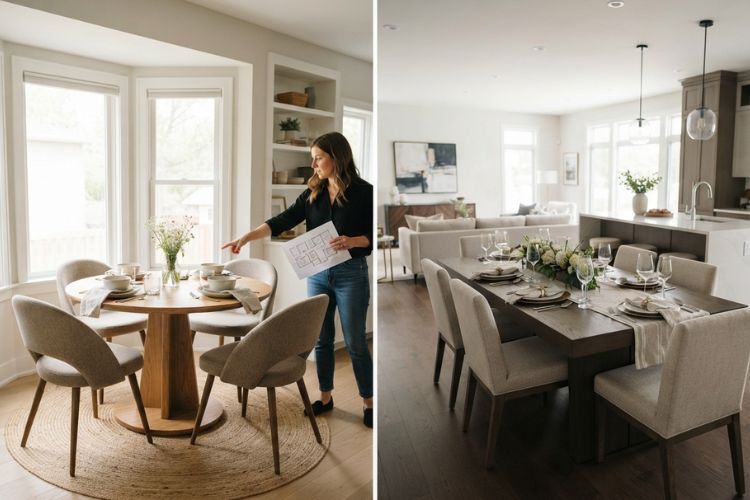
Use this dining table shape guide to quickly narrow your options:
When comparing a rectangle vs. round dining table, think about seating and walking space first. Custom wood furniture gives you more flexibility to adjust the table size and proportions to your room.
The best dining table shape is not automatically rectangular, round, square, or oval. It is the one that fits your room, gives people space to move, seats your usual group comfortably, and suits how you use the table each day.
Custom design gives you more freedom than choosing from predetermined Dining Table Shapes. Crooked Tree Woodworks can bring the wood, proportions, edge profile, and base together in one design, creating a table that feels naturally suited to the room rather than simply placed inside it.
Which dining table shape works best in a small room?
Round tables often work well because there are no corners extending into walking areas. A compact rectangular table can also be practical in a narrow space.
Is a round table better than a rectangular table?
Neither is always better. Round tables suit smaller groups and conversation, while rectangular tables generally provide more flexibility for larger seating arrangements.
Can I put a round table in a rectangular dining room?
Yes. A round table can create contrast in a rectangular room, particularly when the dining area occupies only one part of the overall space.
Which table shape gives you the most seating?
Rectangular tables usually make efficient use of their length and can accommodate larger groups. The actual number of seats also depends on chair width and base placement.
Is an oval table good for a narrow dining room?
It can be. Oval tables provide useful length while removing sharp corners, which may make walking around the ends easier.
What table shape works best for six people?
Rectangular and oval tables are common choices for six diners. Some larger round tables can also accommodate six, depending on their diameter and base.